
State Bank of India, Tech Mahindra, Larsen & Toubro, Tata Steel, Sun Pharma, Infosys, HCL Tech, Axis Bank, Tata Consultancy Services and NTPC were among the biggest laggards among Sensex shares. Nestle, Hindustan Unilever, Titan, Power Grid, UltraTech Cement and ITC were among the gainers.

From the Sensex pack, Tech Mahindra, HDFC Bank, Larsen & Toubro, ITC, Infosys, IndusInd Bank, Kotak Mahindra Bank, Titan and HCL Technologies were among the gainers. Maruti Suzuki India, Tata Steel, Bajaj Finance, UltraTech Cement, Nestle India, Axis Bank and Tata Consultancy Services (TCS) were among the laggards.

The US Fed interest rate decision, trading activity of foreign investors and quarterly earnings from corporates would largely drive the momentum in the equity market this week, analysts said. Escalating tensions between India and Pakistan over the Pahalgam terror attack will also remain on investors' radar, they added.

From the 30 blue-chip pack, Mahindra & Mahindra, IndusInd Bank, Bajaj Finance, Tata Motors, Bajaj Finserv, Nestle and ICICI Bank were the biggest gainers. State Bank of India, Tata Steel, Adani Ports, Zomato, UltraTech Cement and HCL Tech were among the laggards.

From the 30-share Sensex pack, Mahindra & Mahindra, Infosys, HCL Technologies, Adani Ports, Bajaj Finance, Tech Mahindra, Titan, Tata Consultancy Services, Reliance Industries and Power Grid were among the laggards. On the other hand, State Bank of India was the only gainer.

Wipro was the biggest loser in the Sensex pack, slipping nearly 2 per cent, followed by IndusInd Bank, State Bank of India, Kotak Mahindra Bank, ICICI Bank, HDFC Bank, Infosys, Tata Consultancy Services, HDFC and Bajaj Finserv. On the other hand, Nestle, Mahindra & Mahindra, ITC, HCL Technologies, Asian Paints and Maruti were among the gainers.

Equity benchmark indices are facing massive corrections, with the NSE Nifty declining over 14 per cent from its lifetime high hit in September last year due to several negative triggers like stretched valuations, foreign fund exodus, disappointing quarterly earnings and rising global trade tensions dragging markets lower. The BSE benchmark Sensex hit its record peak of 85,978.25 on September 27 last year, and the Nifty also reached a lifetime high of 26,277.35 on the same day.

Geopolitical developments between India and Pakistan, quarterly earnings and macro data will be the key drivers of stock markets in the holiday-shortened week, say analysts.

Investors' sentiments will be guided by a host of domestic and global macroeconomic data announcements this week, along with the trading activity of foreign investors and trends in world stocks, analysts said. Besides, the rupee-dollar trend and movement of global oil benchmark Brent crude will also be crucial in dictating terms in the market, experts added.

Titan, Nestle, Hindustan Unilever, State Bank of India, Larsen & Toubro, ITC, Zomato and Bajaj Finserv were also among the laggards. Adani Ports, IndusInd Bank, Tata Motors and HDFC Bank were among the major gainers.
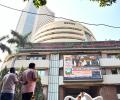
'BSE has facilitated nearly Rs 35 trillion in capital raising across multiple segments.'

From the 30-share Sensex pack, Mahindra & Mahindra, Larsen & Toubro, State Bank of India, Reliance Industries, ICICI Bank and Bajaj Finance were the biggest gainers. JSW Steel and Infosys were the laggards.
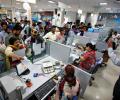
In 2025 banks are in for challenges such as pressure on margins and slowing credit growth. With the likelihood of a repo rate cut in February or April, external benchmark-linked loans of banks will be repriced immediately. However, deposit rates are expected to adjust more gradually, which could impact the net interest margin (NIM) - a key measure of profitability for banks.

State Bank of India, Adani Ports, Tata Consultancy Services, ICICI Bank, Reliance Industries and PowerGrid were also among the laggards.

Stock markets closed lower for the second straight day on Friday amid relentless foreign fund outflows and losses in blue-chip stocks Reliance Industries, ICICI Bank and State Bank of India. Benchmark BSE Sensex declined by 55.47 points or 0.07 per cent to settle at 79,486.32. During the day, it tanked 424.42 points or 0.53 per cent to 79,117.37.

During the first eight months of CY24, 50 IPOs mobilised Rs 53,453 crore.

From the 30-share Sensex pack, NTPC, Asian Paints, HDFC Bank, State Bank of India, Tata Motors, JSW Steel, Maruti and Power Grid were among the major laggards. On the other hand, Sun Pharma, Infosys and ICICI Bank were the gainers.
Benchmark Sensex advanced 110 points in a choppy trade on Wednesday, extending its gains to the fourth day in a row helped by buying in HDFC Bank, ICICI Bank and fresh foreign fund inflows. The 30-share barometer rose by 110.58 points or 0.14 per cent to settle at 80,956.33 with 14 of its constituents ending with gains and 16 stocks with losses. During the day, it jumped 399.64 points or 0.49 per cent to 81,245.39 and dipped to a low of 80,630.53.

From the 30-share blue-chip pack, Adani Ports jumped over 5 per cent. NTPC, Tata Steel, Bajaj Finserv, Zomato, Bajaj Finance, Tata Motors, State Bank of India, IndusInd Bank and Maruti were among the other big gainers. From the 30-share pack, Hindustan Unilever, Titan, Tata Consultancy Services, Infosys and UltraTech Cement were the other laggards.

Finance, ICICI Bank, Mahindra &h Mahindra, Kotak Mahindra Bank and Titan were among the gainers. Bharti Airtel, Adani Ports, Tech Mahindra, Reliance Industries, Axis Bank, Larsen & Toubro were the laggards.

Investors will take cues from the December quarter corporate earnings, with blue-chips like Infosys, Reliance Industries scheduled to report their results this week, in addition, inflation data and trading activity of foreign investors will also be crucial in dictating market trends, analysts said.
A host of macroeconomic data announcements, the last batch of September quarter earnings, global trends, and trading activity of foreign investors will be the major driving factors for the equity market this week, according to analysts. Equity markets would remain closed on Friday for Guru Nanak Jayanti. "India is set to release CPI and IIP data on November 12, with WPI data expected on November 14.

'Market corrections are a natural part of investing, so it's essential to remain focused on long-term financial goals.'

Defence stocks have been on a tear, with the Nifty India Defence index hitting all-time highs. Over the past week, the index jumped around 7 per cent, far outpacing the flat performance of the Nifty 50. Over the past month, its 12 per cent gain has trebled the benchmark's return.

Despite a healthy performance in the fourth quarter of 2024-25 (Q4FY25), the stock of India's largest listed pharma company, Sun Pharmaceutical Industries (Sun Pharma), was under pressure on Friday due to a muted guidance. The company has guided for a high single-digit revenue growth for FY26, which is below what the Street was working with.

Among the 30-share Sensex blue-chip pack, Bharti Airtel, ITC, Kotak Mahindra Bank, Hindustan Unilever, Titan, UltraTech Cement, HCL Technologies, and Power Grid, were the biggest gainers. Tata Steel, IndusInd Bank, JSW Steel and Bajaj Finserv were the laggards.

From the 30-share blue-chip pack, Zomato cracked nearly 7 per cent. Power Grid, Adani Ports, Tata Steel, NTPC, Tata Motors, Tech Mahindra, Mahindra & Mahindra, Asian Paints, Sun Pharma and UltraTech Cement were the other major laggards. In contrast, Axis Bank, Hindustan Unilever, Tata Consultancy Services and IndusInd Bank were the gainers.

Adani Enterprises Ltd (AEL) reported an over sevenfold year-on-year (Y-o-Y) rise in its consolidated net profit, attributable to the owners of the company, for the January-March quarter of 2024-25 (Q4FY25) due to an exceptional item gain. The conglomerate's net profit was recorded at Rs 3,844.91 crore, up from Rs 450.58 crore a year ago.

Ask rediffGURU and PF expert Milind Vadjikar your insurance, stocks, mutual fund and personal finance-related questions.

Trading activity of foreign investors and global trends will be the major driving factors for the equity markets in a holiday-shortened week ahead, according to analysts. Leading stock exchanges BSE and NSE have declared a trading holiday on November 20 for assembly elections in Maharashtra. Elections to the 288-member state legislative assembly will be held on November 20, and votes will be counted on November 23.
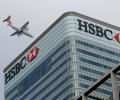
As India faces slowing economic growth, HSBC Global Research has downgraded the Indian stock market outlook from "overweight" to "neutral". In a report, the global financial services firm said profits at India Inc appeared to have softened while valuations are elevated. After annualized growth of 25 per cent in recent years, profits appear to have softened while valuations are elevated at 23x forward earnings.

Net profit of 19 listed banks is likely to decline by 4 per cent year-on-year (Y-o-Y) for the quarter ended March (Q4FY25) mainly due to pressure on net interest margins (NIM) as a result of rate cut by the Reserve Bank of India (RBI), according to analysts' estimates. Additionally, loan growth is expected to further slowdown amid low demand in certain secured products, stress in the unsecured segment, and a high cost to deposit (CD) ratio across the system.

Listed paint majors posted another lacklustre showing in the January-March quarter (Q4) of 2024-25 (FY25), with average revenue growth under 3 per cent. Sales were weighed down by Asian Paints - the market leader and the only major to report a year-on-year (Y-o-Y) decline.
The advance/decline ratio (ADR) - a gauge of market breadth - has remained negative (below 1) for a second consecutive month. In other words, the number of stocks declining is outpacing those rising, as a brutal selloff by overseas investors and lofty valuations weigh on sentiment. According to BSE data, the ADR for October stands at 0.98 for the second month in a row.

Inflows into sector and thematic (S&T) funds fell sharply from around 5,711.6 crore in February 2025 to about 170.1 crore in March 2025 - a decline of 97 per cent. With many such funds underperforming, investors need to assess whether to remain invested or exit.

Inflows into equity mutual fund (MF) schemes declined for the third month in a row in March even though the equity market recovered sharply. Equity MF schemes raked in a net Rs 25,082 crore in March, down 14 per cent from February.

From the 30 Sensex firms, NTPC, Nestle, Titan, Kotak Mahindra Bank, Maruti, Hindustan Unilever, Bharti Airtel and HDFC Bank were the biggest gainers. HCL Technologies, Tata Consultancy Services, Adani Ports, Larsen & Toubro, JSW Steel, State Bank of India, Tech Mahindra and Bajaj Finance were among the laggards from the pack.

A resurgence in Saudi Arabian supplies of crude oil to India coupled with an attack on an Iraqi tanker in August carrying crude to Europe may result in improved bargaining power for India with West Asian and Russian suppliers for winter supplies. Shipments of Saudi oil rebounded in September from August, surging to the highest since March while Russian oil shipments rose marginally as Saudi Arabia tried to claw back market share in Asia, according to industry sources and ship tracking data.

Investors should tilt their portfolios towards domestic-facing defensive sectors, which should help provide stability and shield them from geopolitical and tariff risks.

From the 30 Sensex firms, Mahindra & Mahindra, Infosys, Kotak Mahindra Bank, JSW Steel, Adani Ports, Tata Motors, Adani Ports, ITC and Titan were the major laggards. HDFC Bank, Bharti Airtel, Reliance Industries, Asian Paints and State Bank of India were the gainers.
